Blog / Classic builds
Poke Survivor Builds – Critical Hits & Eclipse Finale
Plan Poke Survivor skill slots, move evolutions and Lv.5 equipment. Prepare for 12- and 15-minute bosses and an optional finale after thirty minutes.
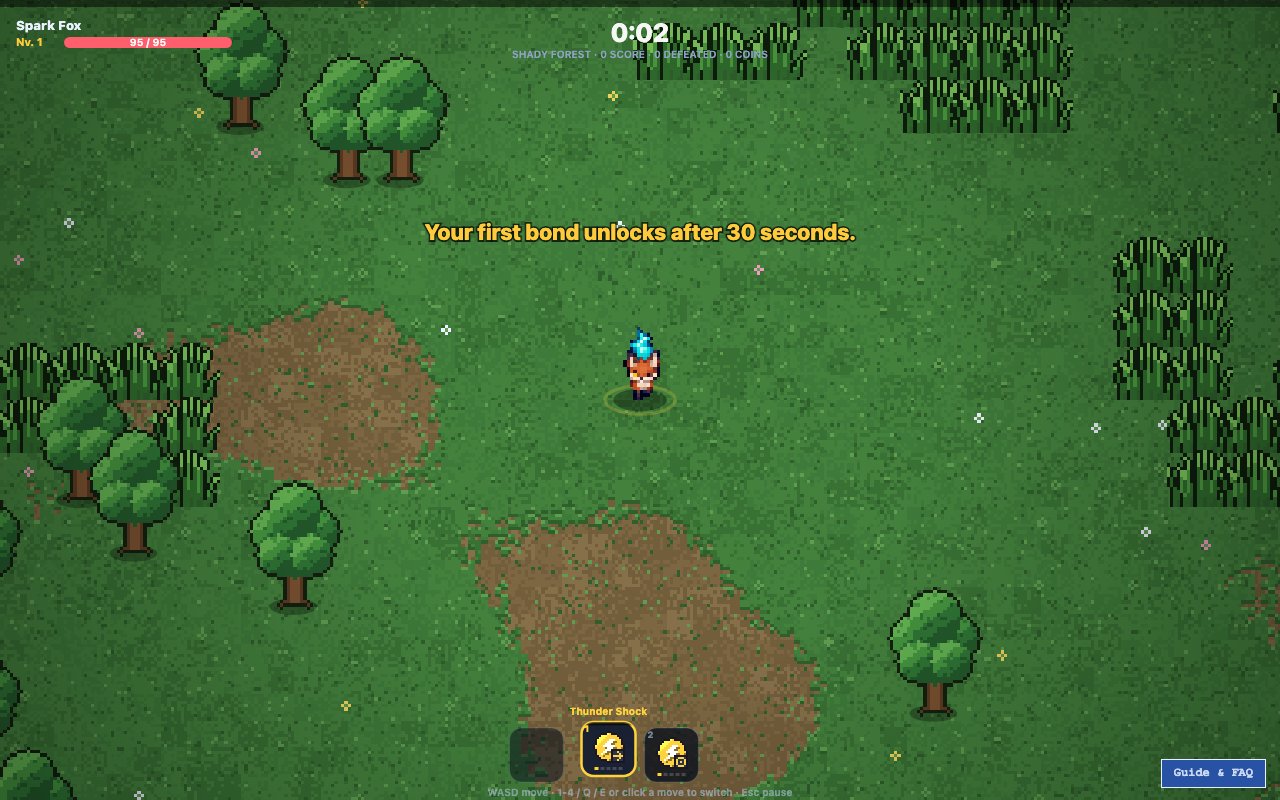
A classic build starts with the slot that actually fires
At pokesurvivor.app, classic survival and Expeditions use the same move library with different attack rules. Classic fires the selected slot automatically. Use 1–4 or Q and E to switch slots, or link attacks with a bond so they fire from the same slot. A classic bonded group can grow to four moves.
Preferred slots are now saved separately for each partner in Upgrades. Put a familiar attack earlier and a situational move later. The setting orders skills as you learn them; it does not grant a skill, leave an unusable empty slot or split a fused group. Move bans and Choice Band restrictions still apply.
New solo players receive two opening attacks and a free guided first bond after fifteen combat seconds until they complete the lesson. After that, regular opening rules and earned rift bonds apply. Movement remains your main defense: leave a route away from the next crowd before choosing a damage upgrade.
Partner upgrades, move evolutions and equipment levels have separate jobs
Keen Instinct is a permanent upgrade for the selected partner. Each rank adds three percentage points of direct-hit critical chance, up to 30% at rank ten. A critical hit deals ×1.5 damage and shows an orange damage number. Burn, poison and retaliation do not independently roll another critical multiplier.
A move evolution is a run choice. Reach that move’s maximum level and take its required stat card, then look for the eligible evolution. Changing slot order does not satisfy those conditions. A bond changes which moves share a slot; an evolution changes a move’s strength.
Equipment growth applies in classic survival and Whispering Forest. Find a duplicate of the equipped item or choose its upgrade to reach Lv.5. Levels two through four each grant experience equal to 35% of a partner level; level five grants a full level of experience and an awakening. This raises the partner’s level during the run. It does not automatically transform its creature form or buy permanent upgrades.
Three build directions, with different tradeoffs
A linked fire slot with recovery
Learn a compatible fire attack such as Ember, link it with Fire Spin and spend upgrades on the moves that are actually attacking. Classic can hold one item: Leftovers offers recovery, while an Ember Crest or Life Orb commits more strongly to damage. You cannot equip a forest power/support set in classic.
A critical burst window for guardians
Keen Instinct can complement a direct-damage build. Hunter Lens increases boss damage and gains an additional effect at its Lv.5 awakening. Watch the boss break window: classic bosses become exposed after damage equal to 15% of maximum health, taking 25% more damage for three seconds. That break meter re-arms after twelve seconds. A critical chance upgrade improves average direct-hit damage; it does not guarantee that the next attack will be critical.
A forest resonance and equipment set
For an Expedition example, bond Ember and Fire Spin, raise both to Lv.3 and equip an accepted catalyst to awaken Solar Furnace. Forest accepts Ember Crest or Moss Heart alongside its original catalysts. Wearing those two items together also activates Wildfire Renewal. The resonance and equipment set are separate effects; owning the pair does not replace the required skill levels and bond.
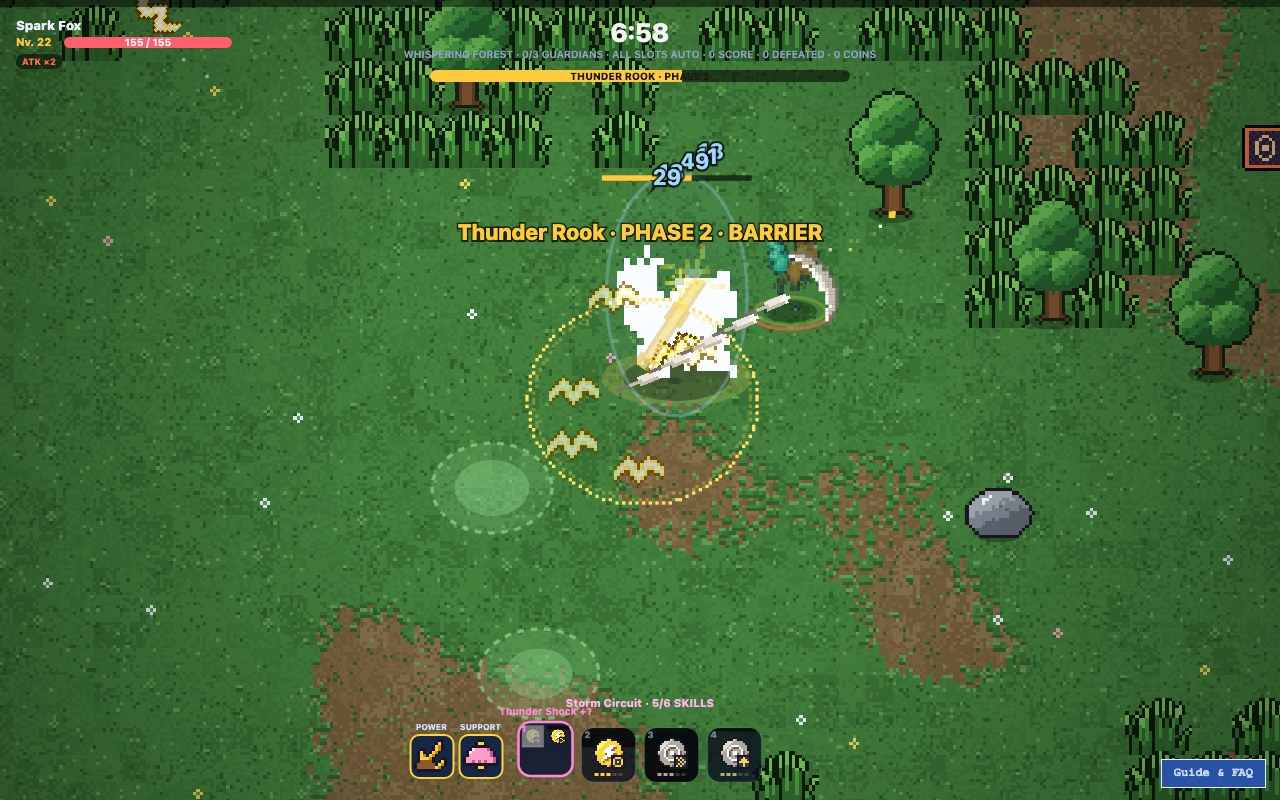
Cavern and volcano retain their eleven original items and Lv.1 effects. The forest’s new equipment and rank awakenings should not be assumed to work on those maps. The build planner checks the selected mode before showing a recipe or set.
Classic now has encounters at 3, 6, 9, 12 and 15 minutes
The original first three timings remain. Two later encounters extend the classic build test, without extending the ten-minute Expedition maps. The twelve- and fifteen-minute guardians wait for a living main boss to fall before arriving.
Late guardians add a ring of warned ground attacks around your position, with a central danger zone and a wide escape lane. The pattern locks its position when warned. Move through the opening rather than following the edge of the ring; the guardian has a recovery period after this attack. More damage helps shorten a fight, but a stronger health bar does not make standing in a marked zone safe.
Defeating the fifth guardian does not force a clear screen. Classic endless survival continues with changing biomes and optional rifts. Solo and cooperative classic records remain on their existing separate leaderboards.
After thirty minutes, the Eclipse Finale is optional
In a clean solo classic run, reaching thirty minutes unlocks a choice in Pause: bank the current classic run and open the finale. You can ignore that option and continue endless survival. If your run ends after thirty minutes, the result screen also offers entry with that build. Expeditions, cooperative runs and an active rift do not offer this solo finale.
The classic run settles first. Its coins, tickets and leaderboard result use the normal process. Eclipse then carries your learned skills, bonds, equipment and run level into a fresh battlefield with full health. Defeat three guardians, one at a time, within three minutes. The build stays fixed; finale enemies do not drop experience, currency or tickets.
Eclipse results are separate from classic records. Leaving, defeat or timeout does not pay the classic reward again or submit its score again. A clean first clear earns the Eclipse Breaker achievement, 500 coins and one single-draw ticket. Normal return and saving actions remain independent of advertising.
A larger original roster keeps discoveries personal
This wave adds fifteen starting partners, twelve additional three-form creature lineages and ninety extra enemies. Evolution forms are additional entries: together these are 141 new forms, bringing this edition’s original roster to 315 and its starting choices to fifty.
The ninety extra enemies split between sixty classic encounters and thirty Expedition encounters, ten per map. The twelve lineages are separate additions. Their basic, middle and final forms appear in appropriate encounter tiers. Every form still requires its own encounter before the personal atlas reveals its name, description, types or observations. Meeting the base form does not reveal its evolutions.
Encountering a creature does not automatically grant ownership or change the selected partner’s form. Collection, move evolution and run-level growth are different systems. The game continues to use project-original creatures and animations.
Check the ingredients before committing a run
Use the Poke Survivor build planner to arrange four slots, compare equipment, check a named resonance and share a link. Select your partner’s types so the tool can flag an unavailable ingredient. Shared links contain public build choices and do not include an account or game save.
The tool checks rules, not a guaranteed victory. Drops, upgrades, enemy matchups, weather and positioning vary. Start with one plan you can recognize during a level-up, then leave room for the run to offer something different.